
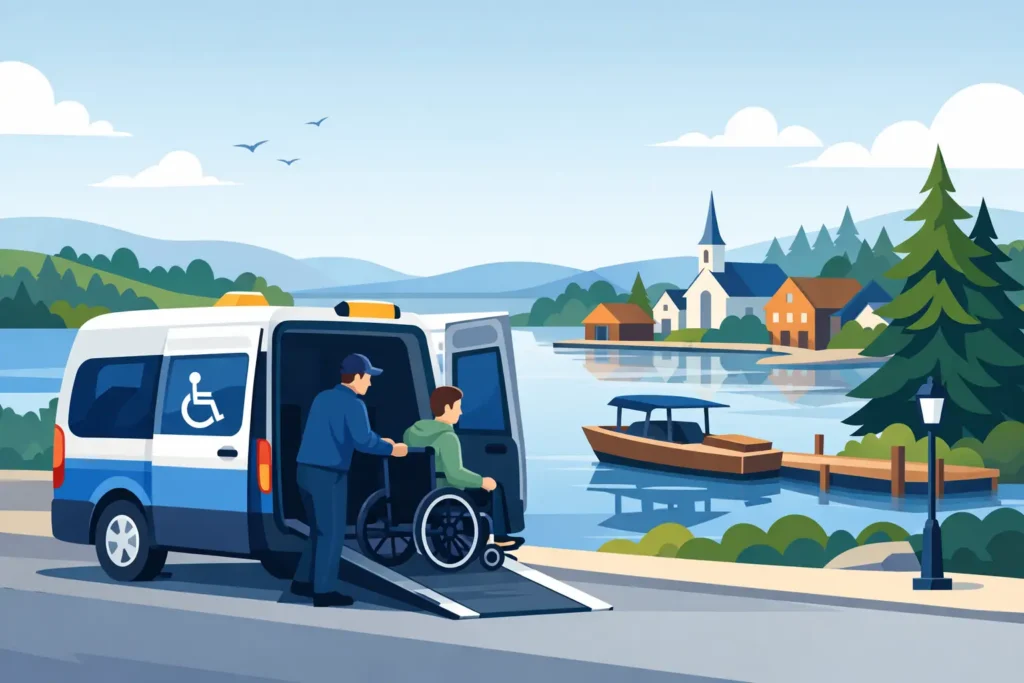
A missed medical appointment, a late-night discharge, or a family gathering across town can turn stressful fast when accessible transportation is uncertain. If you are looking for a wheelchair taxi Gravenhurst riders can depend on, the priority is simple – safe boarding, trained assistance, on-time arrival, and service that is available when you actually need it.
For many passengers, accessibility is not a special add-on. It is the starting point. A ride has to be practical, respectful, and built around real mobility needs, whether that means space for a wheelchair, extra time for secure loading, or a driver who understands how to assist without rushing the passenger.
Not every vehicle that offers extra room is truly suitable for wheelchair transportation. Accessible service depends on more than size. The vehicle needs proper entry and restraint systems, and the driver needs to know how to use them correctly. That combination matters for safety, comfort, and peace of mind.
Reliability matters just as much. If a passenger is traveling to a clinic, heading home from a treatment, catching a connection, or attending an event, timing is part of the service. A delayed ride can create a chain of problems that affects caregivers, family members, and medical staff as well.
Local knowledge also makes a difference. In a place like Gravenhurst, trips are not all the same. Some are short local rides. Others involve transfers to nearby communities, medical facilities, transportation hubs, or seasonal destinations. A professional local company understands route timing, weather conditions, pickup logistics, and how to plan around the realities of Muskoka travel.
Wheelchair-accessible transportation serves a wider group of riders than many people assume. Some passengers use a wheelchair full-time. Others need accessible boarding temporarily after surgery, illness, or injury. Seniors may need a vehicle with easier entry and more support, even if they do not use a wheelchair every day.
Family members and caregivers often arrange these trips as well. In those cases, the right service reduces stress for everyone involved. It helps to know the vehicle is designed for accessibility and that the driver is prepared for the job, especially when the ride is tied to medical care or a fixed appointment time.
Visitors to the area also benefit from dependable accessible transportation. Travel plans are easier when people do not have to guess whether a local ride will meet their mobility needs. For guests staying in Gravenhurst or traveling through the area, clear access to wheelchair-friendly transportation can make the difference between a smooth visit and a frustrating one.
Some trips can be handled on demand, but wheelchair service is often best when booked ahead. That is especially true for early morning pickups, medical appointments, airport transfers, return trips from treatment centers, or evening events with a specific end time.
Pre-booking gives the dispatch team time to assign the right vehicle and plan around your schedule. It also gives the passenger or caregiver a chance to share the important details in advance, such as whether the rider will remain in the wheelchair, whether assistance is needed at pickup, or whether a companion will be traveling too.
That said, availability still matters outside of scheduled rides. Transportation needs do not always happen on a tidy timeline. A reliable provider should be prepared for both pre-arranged service and urgent local requests whenever possible. OPEN 24/7 service is especially important for medical transport, hospital pickups, and late arrivals.
A professional wheelchair taxi Gravenhurst service should feel organized from the first call or booking request. The process should be clear, the communication should be direct, and the expectations should be easy to understand. Riders should not have to chase basic information about pickup timing, vehicle type, or payment options.
The ride itself should also reflect a higher standard. That includes a clean, modern vehicle, proper securement for the wheelchair, and a driver who is patient, respectful, and professionally trained. Good accessible transportation is practical, but it is also personal. Passengers need to feel safe and treated with dignity throughout the trip.
There is also a difference between basic transport and service that is built around comfort without compromise. For some riders, a few extra minutes at pickup are not a delay. They are part of doing the job right. The best providers understand that efficiency matters, but not at the expense of safety or courtesy.
If you are arranging a ride for yourself or someone else, a few details can help avoid problems on the day of travel. Ask whether the vehicle is specifically equipped for wheelchair transportation, whether the driver is trained in accessible assistance, and whether advance booking is recommended for your trip time.
It also helps to confirm pickup and drop-off details carefully. Medical buildings, apartment entrances, assisted living facilities, and event venues can all have different access points. A small detail at booking can save a lot of confusion later.
Medical transportation is one of the most common reasons passengers request wheelchair-accessible service, but it is far from the only one. Daily life still includes errands, family visits, work, community events, and airport connections. Accessible transportation should support all of those needs, not only clinical ones.
That broader view matters because mobility is tied to independence. A dependable ride allows passengers to keep appointments, stay connected to family, and move through the community with less uncertainty. For caregivers, it also removes some of the pressure of trying to coordinate every trip personally.
Some rides are straightforward, while others require more planning. A same-day local errand is different from a scheduled transfer to a regional destination. Neither is more important than the other, but the service approach may change. A strong local provider can handle both without making the customer feel like their trip is an inconvenience.
Accessible transportation is not only about the vehicle. It is also about execution. Local experience helps with route planning, seasonal traffic, weather disruptions, and the practical realities of pickup locations across the area.
In Gravenhurst and the wider Muskoka region, conditions can shift quickly. Summer traffic near popular destinations, winter roads, and varying travel times between communities all affect scheduling. A provider with regional familiarity is better positioned to give realistic pickup windows and dependable service.
That is one reason many riders prefer an established company rather than taking chances with unfamiliar transportation options. Muskoka Taxi has built its local reputation around availability, fleet capability, and a clear commitment to accessible service, including leadership as Gravenhurst’s first wheelchair-accessible taxi service. For customers, that local foundation matters because it supports consistency.
The right accessible ride should not feel difficult to arrange. You should be able to book with confidence, know what kind of service to expect, and trust that the vehicle and driver are prepared for the trip. That applies whether you are booking one ride, setting up recurring transportation, or arranging travel for a family member.
Price matters, of course, but accessibility decisions are rarely about cost alone. Safety, timing, vehicle suitability, and professionalism carry just as much weight. A cheaper option is not much value if it creates uncertainty or does not meet the passenger’s actual mobility needs.
If you are comparing providers, look at the full service picture. Are they available when you need them? Do they have the right fleet? Can they handle local rides and longer transfers? Do they communicate clearly and treat accessibility as a core service rather than an exception? Those are the details that usually shape the experience more than anything else.
A dependable wheelchair-accessible ride does more than get someone from one address to another. It gives passengers and families one less thing to worry about, and on the days that matter most, that can make all the difference.