
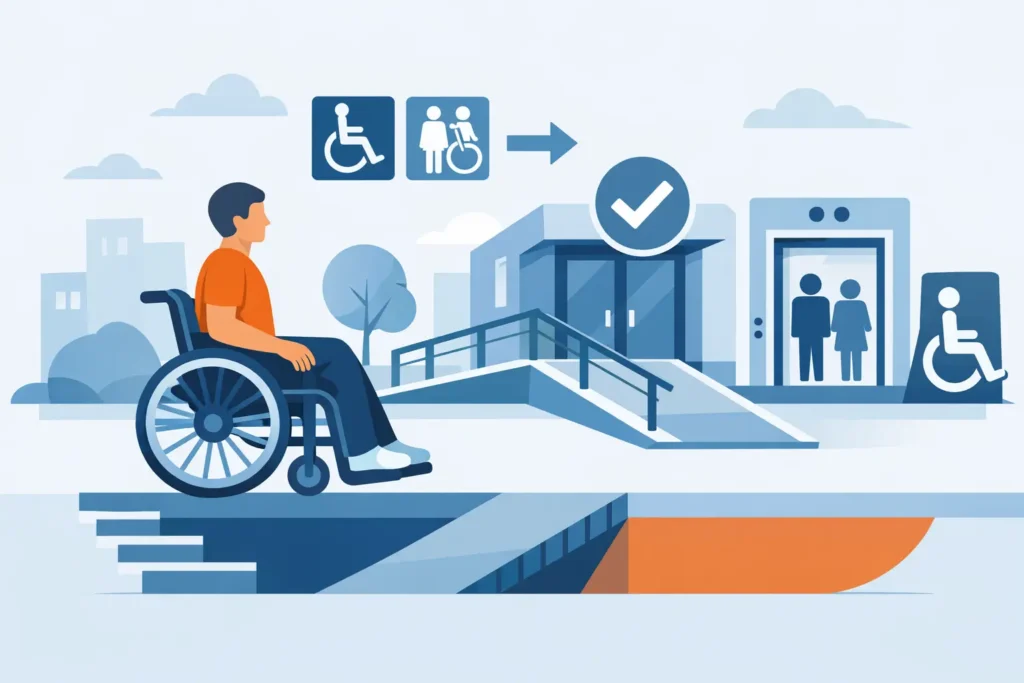
If you have ever booked a ride, hotel, clinic visit, or event and paused at the words what does wheelchair accessible mean, you are asking the right question. The term sounds simple, but in practice it can mean very different levels of access. For anyone planning transportation or daily travel, that difference matters.
A wheelchair-accessible service should do more than technically allow entry. It should make the trip safe, practical, and respectful from pickup to drop-off. That includes the vehicle itself, the way boarding happens, the amount of space inside, and whether the driver is prepared to assist properly.
At its most basic, wheelchair accessible means a person who uses a wheelchair can enter, ride, and exit safely without having to leave the chair behind. In transportation, that usually means the vehicle has equipment such as a ramp or lift, secure tie-downs, enough interior clearance, and a seating layout that allows the passenger to travel without being squeezed into an unsafe position.
But real accessibility goes beyond equipment. A service is not truly wheelchair accessible if the ramp is too steep, the securement system is missing, the driver is unsure how to use the equipment, or the passenger is left wondering whether the vehicle will actually fit their chair. Accessibility is about reliability as much as design.
This is why the phrase should never be treated like a vague marketing label. It should describe a service that is built and prepared for wheelchair users, not one that simply tries to make do when the ride arrives.
Many people assume wheelchair accessible means any vehicle with a little extra room. That is not the case. A large SUV or van is not automatically accessible just because a folded wheelchair can fit in the back. If the passenger must transfer out of their wheelchair and someone else loads the chair separately, that may be helpful in some situations, but it is not the same as wheelchair-accessible transportation.
For many riders, staying in their wheelchair is the safest and most practical option. Manual chairs, power chairs, and mobility scooters vary widely in size and weight. A service that works for one rider may not work for another. That is why details matter.
A properly accessible vehicle should account for entry, turning space, headroom, securement, and comfort during travel. It should also allow the passenger to board with dignity, without unnecessary lifting, awkward maneuvering, or last-minute improvisation.
When a transportation company advertises wheelchair-accessible service, there are a few basics you should reasonably expect. The vehicle should have a ramp or lift designed for wheelchair entry. Inside, there should be a designated wheelchair position with secure tie-downs or another approved securement system to keep the chair stable while the vehicle is moving.
The floor plan should allow enough room for the wheelchair to fit without blocking safe movement. The door opening and interior height also matter, especially for larger power chairs. In many cases, the vehicle will include occupant restraint systems so the passenger is secured properly as well, not just the chair.
Just as important, the driver should know how to operate the ramp or lift, position the wheelchair, apply securements correctly, and communicate clearly throughout the ride. Equipment without training is not enough.
One reason people get confused is that wheelchair accessible does not always mean the same thing in every setting. In a building, it might refer to a step-free entrance, wider doorways, accessible restrooms, and enough interior space to move comfortably. In a hotel, it may also include lower fixtures, roll-in showers, and accessible parking.
In transportation, the focus shifts to boarding and riding safely. A business may be wheelchair accessible at its entrance but still not offer accessible transportation. Likewise, a ride service may be accessible for a manual wheelchair but not a larger power chair. The term is useful, but only when it comes with specifics.
That is why asking follow-up questions is not being difficult. It is being practical.
If you are arranging a ride for yourself, a family member, or a patient, a quick call can save a lot of stress later. Ask whether the passenger can remain in the wheelchair during transport. Ask if the vehicle uses a ramp or lift. Confirm that the driver is trained to secure both the wheelchair and the passenger.
It also helps to share the type of mobility device being used. A lightweight manual chair, a bariatric wheelchair, and a power chair can require very different vehicle setups. If the rider is traveling with a caregiver, oxygen, a walker, or extra bags, mention that too. Good service starts with clear information.
For medical appointments, airport trips, and scheduled events, timing matters just as much as vehicle design. Accessible transportation should be dependable, not uncertain. If the ride is critical, pre-booking is often the smarter choice.
A truly accessible ride should feel organized. The vehicle arrives as expected. The driver knows the process. Boarding is calm, not rushed. The rider does not have to explain basic safety steps or wonder whether the equipment works.
That experience matters because transportation is rarely just transportation. It is how people get to treatment, family events, work, the airport, and day-to-day commitments. When accessibility fails, the whole day can unravel.
For seniors, people recovering from surgery, and passengers with long-term mobility needs, confidence in the ride is often as important as the destination. Reliable accessible transportation reduces stress for the rider and for the family members helping coordinate the trip.
There is also a human side to this term that gets overlooked. Wheelchair accessible should include respectful communication, patience, and professionalism. Riders should not feel like an inconvenience because they need more boarding time or specialized equipment.
Good service means confirming details in advance, arriving prepared, and treating accessibility as a standard part of operations rather than an exception. It means understanding that no two riders have exactly the same needs. Some passengers want minimal assistance. Others may need more support entering the vehicle or managing personal items. The right approach is clear communication and trained service, not assumptions.
Accessibility does not stop at the vehicle door. In smaller communities and regional areas, local route knowledge can make the trip easier. Drivers who know clinic entrances, event access points, and the practical realities of pickup locations can often provide a smoother experience.
That can be especially useful during poor weather, busy seasonal traffic, or trips involving medical facilities and timed appointments. In places like Gravenhurst and the wider Muskoka area, dependable wheelchair-accessible transportation is not just about having the right van. It is about showing up on time, knowing the area, and handling the trip with care.
Even when a service is genuinely accessible, there can still be limits. Weight capacity, chair dimensions, passenger count, and trip type all affect whether a specific vehicle is suitable. Some services can handle standard wheelchairs but not larger power devices. Others may need advance notice for early morning medical transport or longer regional trips.
That is not a sign of poor service. It is part of matching the right vehicle and driver to the rider’s needs. Honest communication is better than a vague yes.
For that reason, the best providers will tell you exactly what they can accommodate and what they need to know before dispatching a vehicle. That level of clarity is a good sign.
When people ask what does wheelchair accessible mean, the best answer is this: it means the service is prepared for the rider, not hoping the rider can adapt to the service. That is the standard worth looking for every time you book. And when a company treats accessibility as part of professional transportation, not a special favor, the trip starts on the right foot before the vehicle even arrives.