
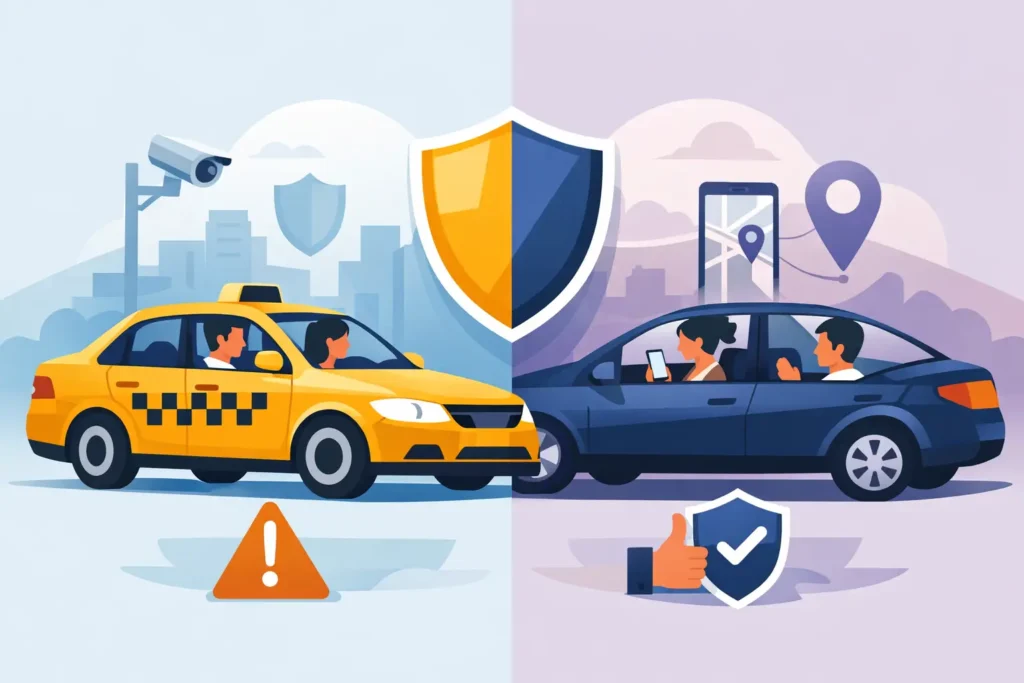
A ride home after a late event, a winter airport pickup, or a medical appointment should not require guesswork. When comparing taxi versus rideshare safety, the safest choice is usually the one that gives you clear information, dependable pickup options, and a driver and vehicle you can confidently identify.
Both taxis and rideshare services can provide a safe ride when the service, driver, and vehicle meet appropriate standards. The practical differences often come down to how the ride is booked, how accountability works, whether help is available when plans change, and whether the vehicle can meet the passenger’s specific needs.
A taxi service is generally built around a local dispatch operation, commercially operated vehicles, and drivers who work within established service procedures. A rideshare trip is commonly arranged through an app that connects a passenger with an available independent driver. Neither model is automatically safer in every situation, but they create different safety checks for the passenger.
With a rideshare booking, passengers can usually see a driver name, vehicle description, license plate, route, and estimated arrival time in the app. That visibility can be helpful, especially when you take a moment to confirm that the vehicle and driver match the trip details before entering.
With a professional taxi, passengers may book by phone, online, or through a dispatcher. The company should be able to identify the assigned vehicle, provide a clear pickup process, and respond if a driver is delayed or a passenger cannot locate the car. For many people, particularly those traveling outside busy urban areas, the ability to reach a real local dispatcher can be reassuring.
The key question is not simply, “Taxi or rideshare?” Ask: Can I verify this vehicle? Do I know how to contact the service if something goes wrong? Does this ride fit my mobility, timing, and location needs?
The most useful safety habit applies to every hired ride: never enter a vehicle just because it pulls up where you are waiting. Confirm the ride first.
For a rideshare pickup, check the license plate, vehicle make and model, and driver photo against the app. Ask the driver who they are picking up rather than offering your name first. If the details do not match, do not get in. Cancel the trip from a safe location and arrange another ride.
For a taxi, look for clear company identification and confirm the driver has been sent for your booking. If you called a local service, ask the dispatcher for the vehicle number, car description, or estimated arrival time when that information is available. A legitimate driver should not pressure you to enter an unmarked vehicle or accept a ride that you did not request.
This matters at airports, hotels, event venues, and bars, where several cars may be arriving at the same time. It also matters in cottage country, where darkness, weather, and limited lighting can make it harder to identify a vehicle from a distance.
A safe ride includes more than the time spent in the vehicle. Consider what happens if your driver cannot find you, the weather turns poor, your flight is delayed, or you need to change a pickup location.
App-based rideshare services provide digital trip records and in-app support features. That can be useful for documenting a trip, sharing your route with a trusted contact, or reporting a concern after the ride. However, service availability can vary by area and time of day. In smaller communities and during peak travel periods, there may not be enough drivers nearby to provide a quick replacement ride.
A local taxi company has a different advantage: dispatch support and regional familiarity. An experienced dispatcher may know the entrance a hotel uses after hours, the safest pickup point near an event, or the best way to reach a rural address. A staffed, 24/7 operation can also be a better fit when a passenger needs to pre-book a trip for an early airport departure, hospital visit, or late-night return.
For reliability and safety, pre-booking is often worth considering when the trip has no room for uncertainty. This is especially true for airport transfers, weddings, business travel, and travel during snow, heavy rain, or holiday weekends.
Passengers should expect a professional driver to operate safely, respect traffic laws, keep the vehicle in good condition, and provide a respectful experience. Taxis are typically subject to local commercial transportation requirements, while rideshare drivers may be subject to platform standards and local regulations. The exact rules vary by jurisdiction.
Rather than assuming one model offers stronger protections, look at the practical signs of professionalism. The vehicle should be maintained, reasonably clean, and equipped for the conditions. The driver should be alert, sober, courteous, and willing to confirm the trip. Seat belts should be available for every passenger, and children should use appropriate car seats supplied by their parent or guardian when required.
Commercial insurance and regulatory requirements can differ between a taxi and a rideshare vehicle, particularly based on whether a driver is actively carrying a passenger or waiting for a trip request. If insurance coverage is a concern for your situation, ask the transportation provider directly before booking.
For wheelchair users, seniors, passengers recovering from medical treatment, and anyone traveling with mobility equipment, the right vehicle is central to safe transportation. A standard sedan or an unfamiliar personal vehicle may not be suitable for a wheelchair, walker, caregiver, or additional assistance needs.
When booking accessible transportation, explain what you need in advance. Let the company know whether you use a manual or power wheelchair, whether you are traveling with a support person, and whether extra time is needed for boarding. A properly equipped accessible vehicle and a trained driver can help make entry, securement, and exit safer and more comfortable.
This is one area where a dedicated local provider can offer a clear advantage. Muskoka Taxi provides wheelchair-accessible transportation and can help passengers plan for the vehicle type and timing their trip requires. For medical transportation or essential appointments, advance booking gives everyone more time to prepare properly.
Late-night travel creates risks that have little to do with the logo on the car door. Poor lighting, fatigue, impaired driving by other motorists, isolated pickup areas, and a passenger’s own level of alertness can all affect safety.
Wait indoors or in a well-lit public place until your ride arrives when possible. Tell a friend where you are going, or use available trip-sharing features. Sit in the back seat if you are traveling alone, buckle up, and keep your phone charged. If a driver makes you uncomfortable, asks you to change the destination unexpectedly, or appears impaired, end the interaction from a safe public location and contact the service or emergency assistance as appropriate.
A dependable ride service should never make a passenger feel rushed into an unsafe decision. If your original plan falls through, it is better to wait in a safe place and arrange verified transportation than accept an unplanned ride from a stranger.
Rideshare may be a convenient option when app availability is strong, you are comfortable using digital verification tools, and your trip is simple. A taxi may be the better choice when you need a scheduled pickup, a 24/7 dispatcher, an airport transfer, an accessible vehicle, room for luggage or a group, or transportation in an area where on-demand app coverage is less predictable.
For any trip, provide an accurate pickup address, include useful details such as a building entrance or cottage gate, and keep your phone available for driver communication. If you are traveling with children, mobility equipment, pets, skis, or significant luggage, mention it at the time of booking so the correct vehicle can be arranged.
The best transportation decision is the one that leaves you with fewer unknowns. Choose a verified ride, communicate your needs clearly, and give yourself enough time to travel without pressure.