
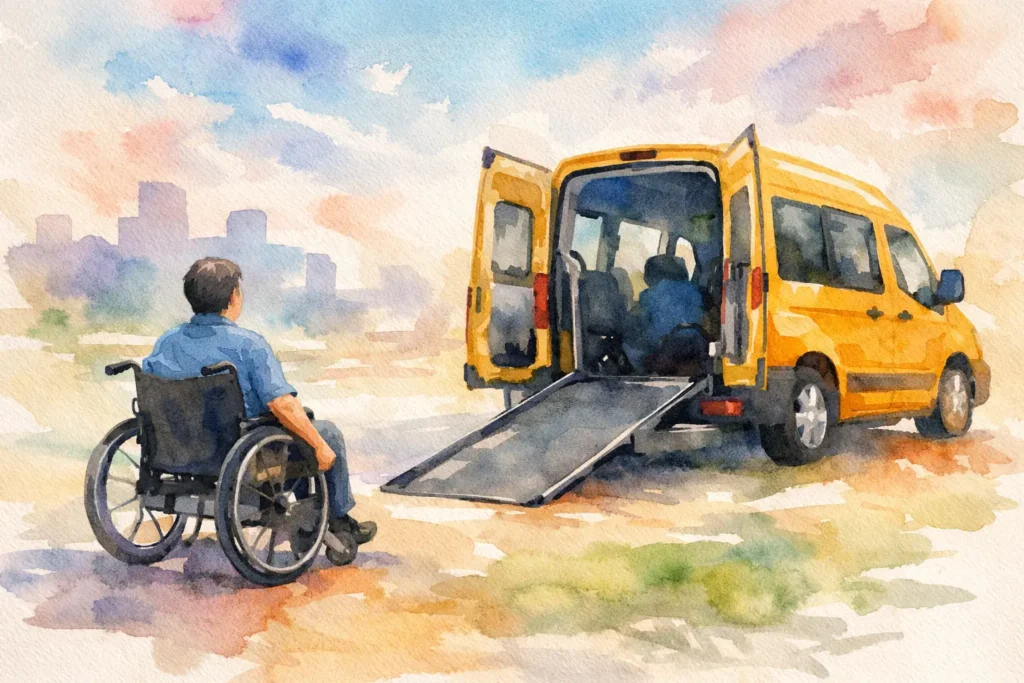
When a standard car ride is not practical or safe, the question becomes simple: what is a wheelchair accessible taxi, and how does it make travel easier? A wheelchair accessible taxi is a specially equipped vehicle designed to carry passengers who remain in their wheelchair during the trip, with the right entry system, securement equipment, and driver assistance to support safe, dependable transportation.
For many riders, this is not a luxury service. It is basic access to medical appointments, family visits, work, errands, airport trips, and everyday life. In a region where timing, weather, and distance matter, the value of accessible transportation is measured in reliability as much as vehicle design.
A wheelchair accessible taxi is a taxi or cab that has been modified or purpose-built to accommodate passengers using a wheelchair or mobility device. Instead of asking the passenger to transfer into a standard seat and fold the chair into the trunk, the vehicle allows the rider to enter and travel in a safer, more appropriate setup.
Most wheelchair accessible taxis use either a ramp or a lift for boarding. Inside, the vehicle includes a designated wheelchair position with tie-downs or securement straps that help keep the wheelchair stable during travel. The passenger is also protected with an occupant restraint system, which works alongside the wheelchair securement system rather than replacing it.
The driver plays an important role. This is not just point-to-point transportation with a larger vehicle. A properly operated accessible taxi service includes trained drivers who know how to assist with boarding, secure the wheelchair correctly, confirm passenger safety, and provide a calm, professional ride from pickup to drop-off.
The difference is not simply extra space. A van or larger vehicle is not automatically accessible just because a wheelchair can fit inside. True accessibility depends on equipment, layout, and service standards.
A wheelchair accessible taxi typically includes a lowered floor or raised roof clearance, a ramp or hydraulic lift, securement points, and seatbelt systems designed for wheelchair users. It also needs enough interior room for safe positioning, not just tight storage. If a vehicle cannot board the passenger safely and secure the wheelchair properly for travel, it is not functioning as a wheelchair accessible taxi in the way riders actually need.
There is also a service side to accessibility. Drivers should understand boarding angles, ramp handling, tie-down procedures, and respectful communication. Some passengers travel independently, while others may need more physical assistance. The right service adapts to the rider rather than forcing the rider to adapt to the vehicle.
The most obvious answer is people who use manual or power wheelchairs. But the service often helps a broader group of riders as well.
Some passengers use mobility scooters, walkers, or other devices and need a vehicle with easier entry. Seniors may benefit from a more stable boarding process, especially for medical visits or longer trips. Families may book accessible transportation for a parent or relative who cannot manage a standard car transfer. Visitors to the area may need dependable service without the uncertainty of trying to arrange specialized transportation after arrival.
This is also why pre-booking can matter. Not every trip has the same requirements. A local errand, a hospital visit, and an airport transfer each involve different timing, equipment needs, and loading considerations. The more clearly those details are handled in advance, the smoother the ride tends to be.
A good booking process should feel straightforward. You should not have to guess whether the vehicle will be suitable or whether the driver understands the request.
In most cases, the service will ask for pickup and drop-off details, the time of travel, and whether the passenger will remain in the wheelchair during transport. They may also ask about the type of wheelchair or mobility device, because size and weight can affect vehicle assignment. For example, a manual wheelchair and a large power chair do not always require the same setup.
If the trip involves an appointment, flight, event, or return ride, sharing that information helps with planning. Accessible transportation works best when there is clear coordination. That does not mean every ride must be booked far in advance, but it does mean reliability improves when the service has the right information from the start.
For riders in Gravenhurst and the wider region, local knowledge matters too. Rural routes, seasonal traffic, clinic schedules, and airport timing all affect how transportation should be dispatched. That is where an established, community-rooted operator has an advantage.
When people ask what is a wheelchair accessible taxi, they often focus first on the ramp or lift. Those features matter, but safety is the real standard.
A proper accessible trip depends on several things working together: safe boarding, correct wheelchair positioning, secure tie-downs, passenger restraint, and careful driving. If any of those are missing, the vehicle may look accessible without delivering the level of protection riders deserve.
There is also the issue of comfort. Safety and comfort are connected. A rider who is positioned properly and secured correctly is more likely to have a stable, less stressful experience, especially on longer routes or uneven roads. In places where trips may involve regional travel rather than a quick urban block, that difference is significant.
Weather can also change the equation. Snow, ice, rain, and cold temperatures make entry and exit harder for many passengers. A professionally operated wheelchair accessible taxi helps reduce those risks with equipment that works in real conditions and drivers who are prepared to assist.
Not always. There can be overlap, but the services are not identical.
A wheelchair accessible taxi is transportation designed for accessibility. It may be used for medical appointments, but it can also be used for shopping, work, social visits, events, or airport travel. Medical transport may involve additional procedures, scheduling requirements, or service conditions depending on the provider and the passenger’s needs.
For many customers, the practical question is simpler: can the service safely transport the passenger where they need to go, at the time they need to go, with the right level of assistance? If the answer is yes, a wheelchair accessible taxi can be the most efficient option for everyday mobility.
Accessible service is only useful if it is actually available when people need it. That is one of the biggest differences between a service listed on paper and a service that supports real daily transportation.
Passengers often need rides outside routine business hours. Early morning airport departures, evening family events, weekend outings, and urgent appointments do not always fit a limited schedule. OPEN 24/7 availability matters because life does not run on a narrow timetable.
This is especially true in communities where transportation options are more limited than in major cities. In Muskoka, dependability means more than arriving on time. It means having a service that covers the area, understands the roads, and is prepared to handle both planned and same-day travel when possible. As Gravenhurst’s first wheelchair-accessible taxi service, Muskoka Taxi was built around that practical need.
If you are arranging transportation for yourself, a family member, or a visitor, ask a few direct questions. Can the passenger remain in the wheelchair? Does the vehicle use a ramp or a lift? Can it accommodate the specific mobility device? Are drivers professionally trained to assist with securement and boarding? Is pre-booking available for scheduled trips?
Those questions get to the heart of service quality. Price matters, but so do punctuality, professionalism, and confidence that the right vehicle will arrive. For accessible transportation, uncertainty is often the biggest problem. A dependable service removes that uncertainty.
The best wheelchair accessible taxi service does more than complete a trip. It gives riders a practical way to keep appointments, maintain independence, stay connected to family and community, and move through the day with less stress. That is what accessibility should look like – clear, safe, and available when it is needed most.