
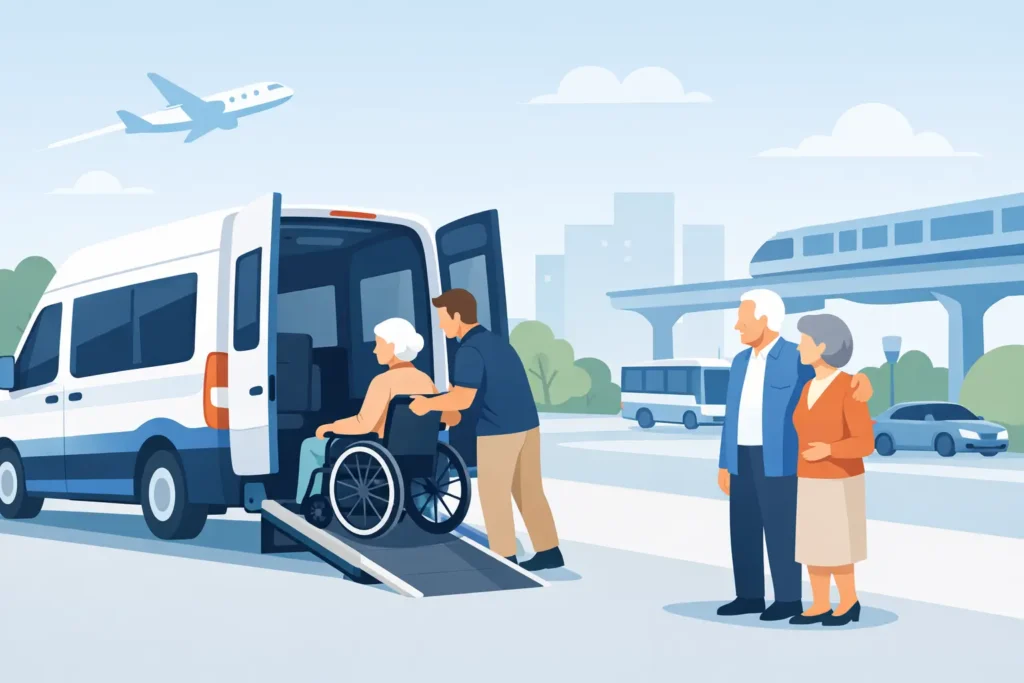
A missed medical appointment is frustrating. A stressful transfer in and out of a vehicle is worse. When families look for wheelchair accessible transportation for seniors, they are usually not looking for bells and whistles. They want a service that shows up on time, handles mobility needs properly, and makes the trip feel manageable from pickup to drop-off.
That is the real standard. Accessibility is not just about having a larger vehicle. It is about whether the entire ride works for the passenger, the family member arranging it, and the schedule that depends on it.
For seniors, transportation needs can vary widely. One rider may use a manual wheelchair and travel independently. Another may need help with positioning, a slower boarding process, or extra time at a medical office. That is why wheelchair accessibility should be treated as a service standard, not a vehicle feature.
A proper accessible ride starts with safe entry and exit. The vehicle should be equipped to handle wheelchair boarding without rushed movements or awkward transfers. It should also secure the chair correctly during travel. If the rider can remain seated in their wheelchair, that can reduce strain and lower the risk of injury during the trip.
Driver training matters just as much. A professionally trained driver understands that seniors may need clear communication, steady assistance, and patience. The pace of the trip may be different from a standard taxi ride, and that is not a problem when the service is built to handle it.
Reliability is another part of accessibility that often gets overlooked. If a vehicle arrives late, the burden usually falls on the senior passenger and the family coordinating the ride. Medical appointments, therapy sessions, dialysis visits, family events, and airport connections all depend on timing. A dependable provider should be able to support both on-demand needs and pre-booked transportation when the schedule cannot be left to chance.
Many families first start searching for senior transportation after a health change. A parent may no longer feel safe getting in and out of a regular car. A walker may no longer be enough. A wheelchair may now be part of everyday life, even for short trips.
At that point, the decision is not simply about getting from one address to another. It becomes a question of comfort, dignity, and predictability. Seniors should not have to feel like their ride is an inconvenience. Families should not have to wonder whether the driver will understand the situation when they arrive.
This is where specialized service makes a difference. A provider that regularly handles wheelchair trips is usually better prepared for the practical details that create a smoother ride. That can include allowing proper boarding time, confirming vehicle type in advance, and understanding that some passengers need a calmer, more deliberate approach.
There are also situations where a standard accessible setup may still require extra planning. Some riders travel with oxygen, medical bags, or a companion. Others may have memory-related conditions that make routine and reassurance especially important. The right service does not overpromise. It asks the right questions before the trip so the ride can be handled properly.
Not every trip needs to be scheduled in advance, but many do. If the ride involves a time-sensitive appointment, a long-distance transfer, or a pickup outside regular daytime hours, pre-booking is often the smartest option.
For seniors, scheduled transportation reduces uncertainty. The rider knows what to expect. The family has confirmation. The provider can prepare the correct vehicle and assign a driver who is ready for the service required.
Pre-booking is especially useful for recurring medical transportation. Weekly therapy, regular specialist visits, and hospital-related travel often work better when transportation is arranged ahead of time. It creates consistency, and consistency matters when health routines are already demanding.
Airport transportation is another example. A senior using a wheelchair may need more time at pickup, more space for luggage or mobility equipment, and a service that understands how important timing is. In these situations, leaving transportation to the last minute can create avoidable stress.
The best transportation decisions usually come from asking a few direct questions. Families do not need a long checklist, but they should know whether the service can actually meet the rider’s needs.
Start with the basics. Ask whether the vehicle is specifically equipped for wheelchair transportation and whether the rider can remain in the wheelchair during the trip if needed. Ask whether the drivers are trained to assist senior and mobility-impaired passengers. If the ride is for a medical appointment or airport transfer, ask how scheduling is handled and what happens if extra time is needed.
It is also worth asking about service availability. Transportation issues do not always happen during business hours. Seniors may need early morning discharge pickup, evening event transportation, or a weekend ride when family support is limited. A provider that is open 24/7 offers practical peace of mind because the answer is not tied to office hours.
Payment and booking options matter too, especially when a family member is arranging the ride for someone else. Online booking, online payment, and prepaid reservations can make things easier when schedules are busy or when adult children are coordinating transportation from another location.
A vehicle can technically be accessible and still feel difficult for the rider. That is why comfort should not be treated as optional. For seniors, comfort often has a direct effect on how manageable the trip feels.
A smooth ride, a clean vehicle, enough interior space, and a driver who does not rush the process all contribute to a better experience. If a senior is dealing with pain, fatigue, or limited stamina, even a short local trip can feel long if the ride is not handled well.
Comfort also includes emotional comfort. Seniors should feel respected, not processed. That may sound simple, but it is one of the clearest differences between a transportation provider that treats accessibility as a real service and one that only treats it as a vehicle category.
In areas where travel can involve small communities, regional routes, medical offices, seasonal traffic, or longer transfer times, local knowledge adds real value. A provider familiar with the area can plan routes more effectively, manage timing better, and reduce confusion at pickup and drop-off.
That is particularly useful for seniors who need transportation to hospitals, clinics, residences, family homes, or airports from places where transportation options may be more limited. In Gravenhurst and across the wider Muskoka area, that kind of regional familiarity can make the ride more dependable, especially when weather, distance, or timing are part of the equation.
As Gravenhurst’s first wheelchair-accessible taxi service, Muskoka Taxi understands that accessible transportation is not a side offering. It is a core service that needs the right vehicle, the right driver approach, and the right level of reliability.
Families often know very quickly whether a transportation service is helping or adding more work. If booking is confusing, timing is inconsistent, or the vehicle does not match the need, the stress starts before the ride even begins.
A strong provider makes the process straightforward. The service should be clear, responsive, and prepared. That does not mean every trip is identical. Some rides are simple and local. Others require more coordination. What matters is whether the company can adjust without losing reliability.
For seniors, transportation should support independence where possible and reduce strain where needed. For families, it should feel dependable enough that they do not have to second-guess the plan every time a ride is required.
The right ride is not just about getting there. It is about knowing the trip will be handled with care, on schedule, and without compromise when accessibility matters most.